

Typically, travelers often seek out familiar types of beauty: crystal-clear turquoise lakes, mountains ablaze with autumn colors, or endless coastlines. Even the most unique destinations often differ only in scale or seasonal variations. The snow-capped peaks of Switzerland and the mountains of Tibet - are they truly that different? Perhaps it's the traveler's mood and experience at that moment that truly define the perception of a place.
However, our planet offers landscapes far beyond the ordinary, places that defy expectations and challenge our very notion of "scenery." Have you ever seen a desert that meets the ocean, a rose-colored lake, mountains shaped like chocolate, or cotton candy-like hot springs? Have you ever gazed into the "Mouth of Hell"?
This post explores ten of the most surreal landscapes on Earth, from the southern hemisphere to the northern, from rainbow mountains to pink lakes. Join us on an adventure to experience the extraordinary!
1. Rainbow Mountains, Peru
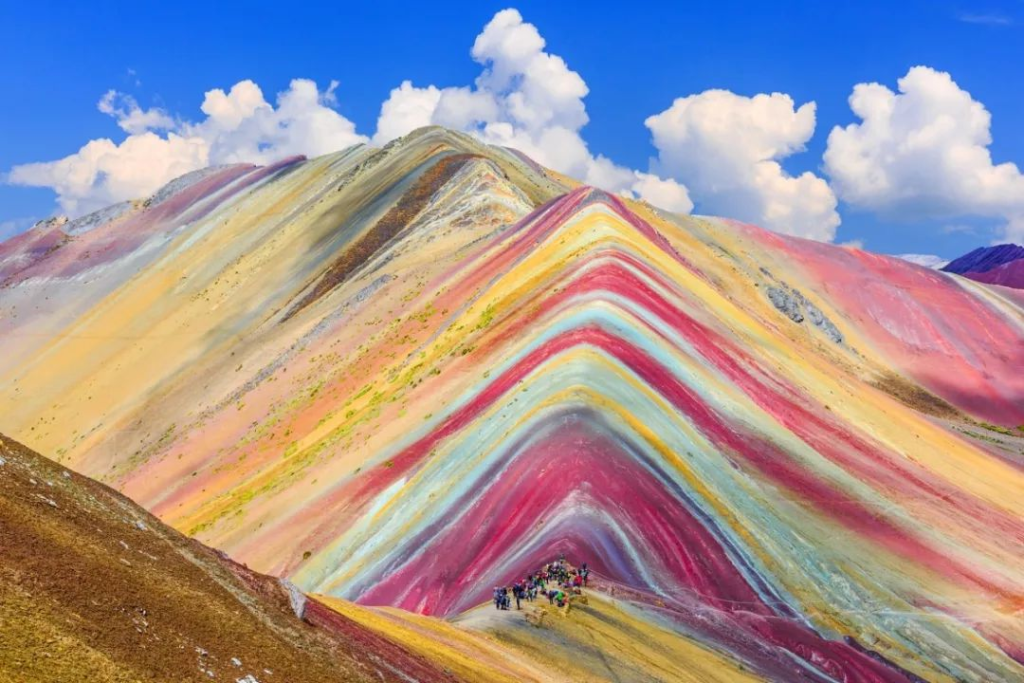
Hidden within the Peruvian Andes, the Rainbow Mountains (Vinicunca) are located about 130 kilometers from the city of Cusco. This remarkable landscape is formed by a series of interconnected mountains.
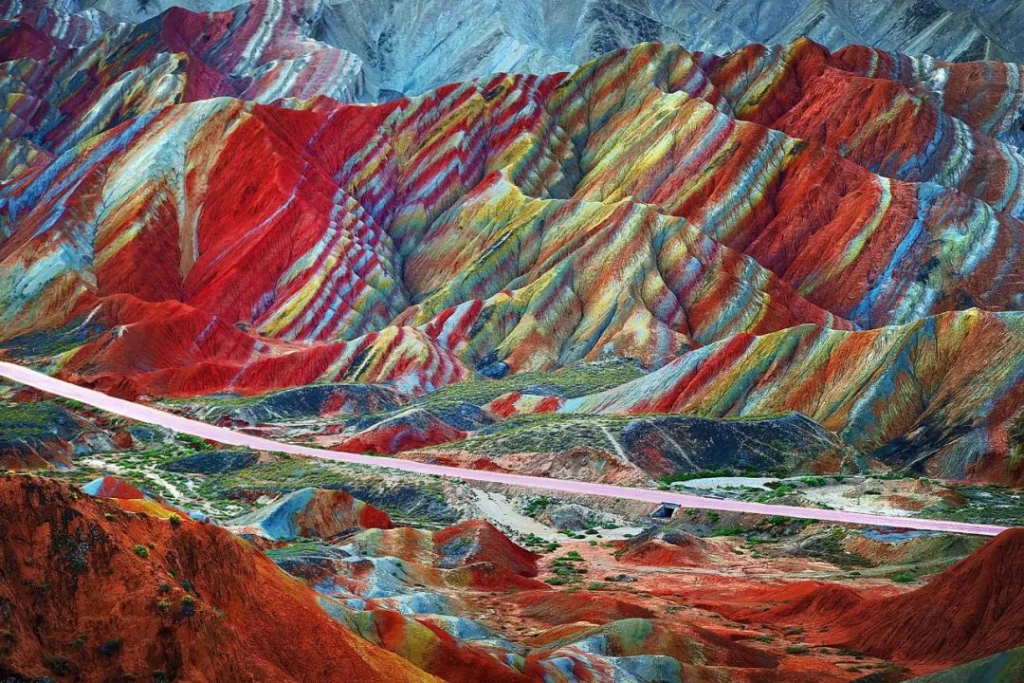
The Rainbow Mountains reach an altitude of about 5,300 meters. Buses can take you up to 4,500 meters, after which you'll embark on a challenging trek. The high altitude can make hiking difficult, but the reward is worth the effort. Upon reaching the summit, you'll be greeted by a panoramic view of the sprawling Andes, a vibrant tapestry of colors that seems to leap from a painting.
The mountains' unique coloration is due to the presence of various minerals. Red hues are created by iron oxide, yellows likely from iron sulfide, and layers of other minerals contribute to the incredible spectrum of colors.
2. Pamukkale Thermal Pools, Turkey
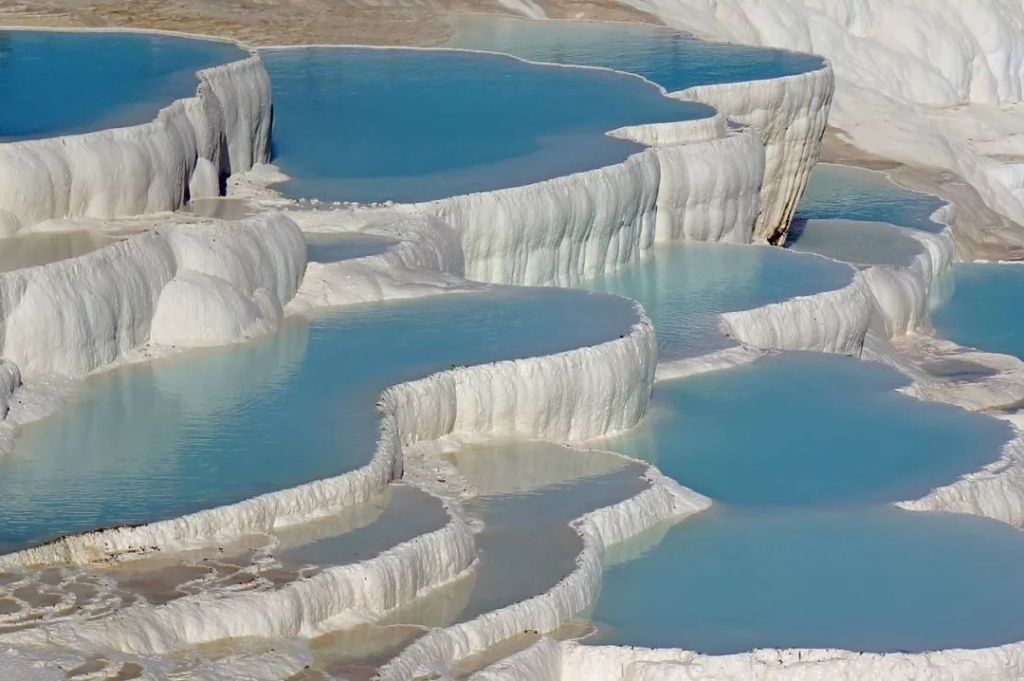
Featured in the reality show "Sisters Over Flowers" and renowned as a spa destination, the Pamukkale Thermal Pools are considered the "eighth wonder of the world" by the Turks. Their beauty and fame have spread far and wide.
Pamukkale, meaning "cotton castle" in Turkish, is a natural site in Denizli Province in southwestern Turkey. The area is famous for a carbonate mineral left by the flowing water, creating stunning white terraces resembling cotton and shimmering thermal pools.
The thermal pools vary in depth, with a constant temperature between 36-38°C (97-100°F). The water is rich in calcium, magnesium, and other minerals, believed to have therapeutic benefits for rheumatism, skin conditions, and digestive issues.
When visiting, it's recommended to bring cotton socks for better grip, as shoes are not allowed in the area. Sunglasses are also advisable due to the intense reflection from the white terraces.
3. Chocolate Hills, Philippines
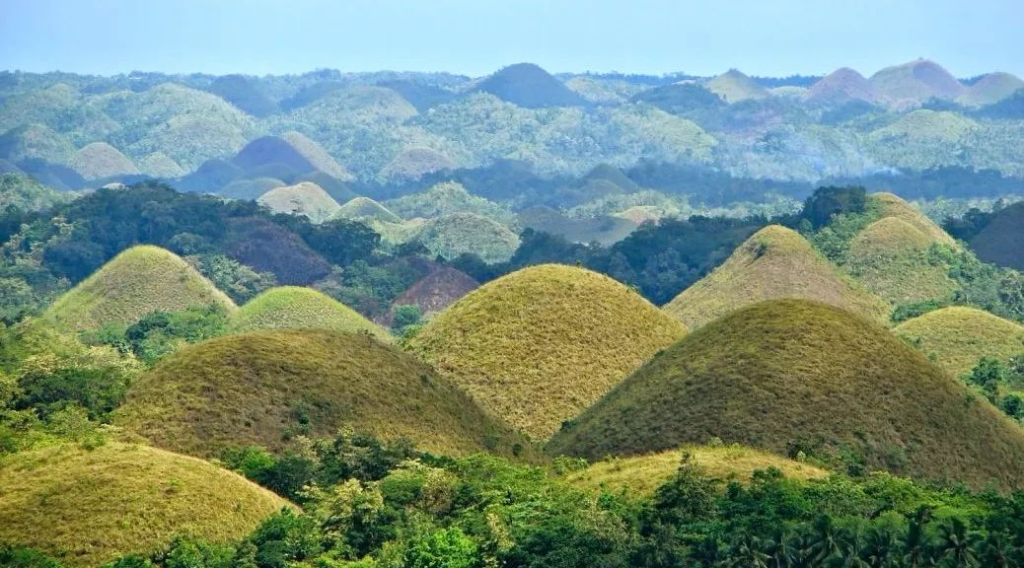
The Chocolate Hills are a geological formation in Bohol Province, Philippines. There are at least 1,268 hills, but there may be as many as 1,776 hills spread over an area of more than 50 square kilometers (20 sq mi). They are covered in green grass that turns brown during the dry season, hence the name.
The Chocolate Hills are a famous tourist attraction of Bohol. They are featured in the provincial flag and seal to symbolize the abundance of natural attractions in the province. They are conical and dome-shaped limestone hills covered in grass. During the rainy season, they are lush green, but in the dry season, the grass withers and turns brown, resembling rows of chocolate candies.
Interestingly, while the surrounding mountains are forested, the Chocolate Hills are covered only in grass, a natural phenomenon that continues to intrigue.
Two of the hills have been developed into resorts with various facilities for tourists.
4. Salar de Uyuni, Bolivia
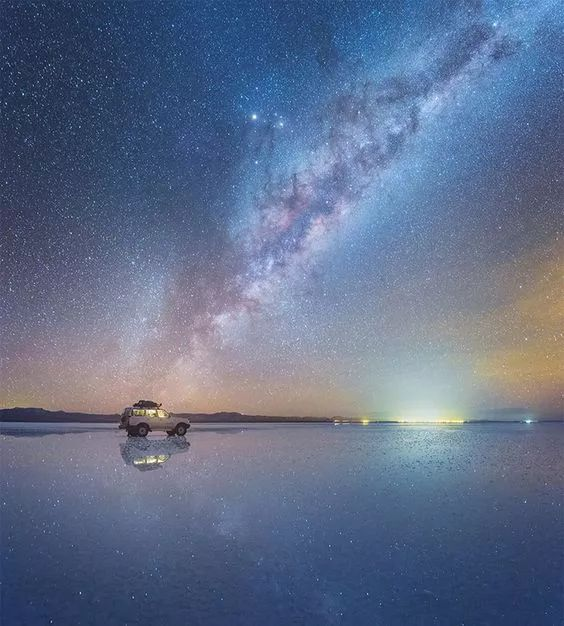
Salar de Uyuni, the world-famous "sky mirror," is located near the town of Uyuni in southwestern Bolivia. It's the world's largest salt flat, rich in rock salt and gypsum.
Situated at an altitude of about 3,700 meters, this vast expanse of white attracts visitors from around the globe. However, venturing deep into the salt flat without a guide can be dangerous.
While the daytime "sky mirror" effect is stunning, the night sky at Salar de Uyuni is truly awe-inspiring. The vast, unobstructed salt flat reflects the incredibly rich and vibrant Milky Way, making you feel as if you're at the center of the galaxy.
The best time to visit is during the rainy season when a thin layer of water creates the mirror effect. However, too much water can obscure the reflection. Generally, late February to early March is considered the ideal time.
5. Giant's Causeway, Northern Ireland
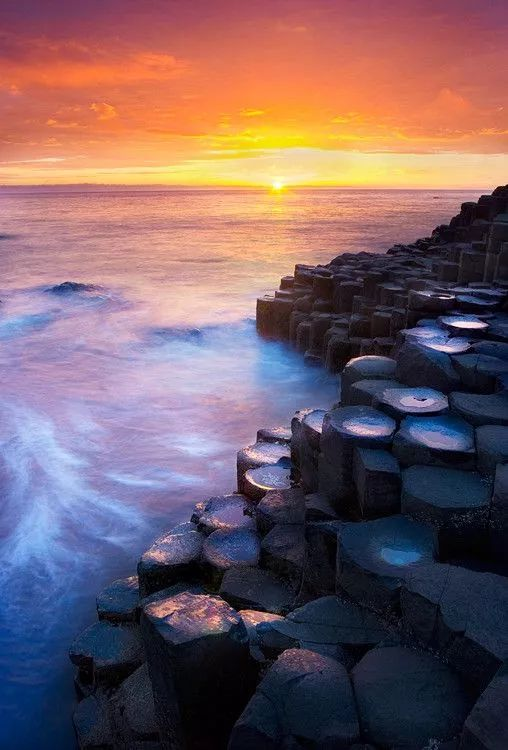
The Giant's Causeway is an area of about 40,000 interlocking basalt columns, the result of an ancient volcanic fissure eruption. It is located in County Antrim on the north coast of Northern Ireland, about three miles (4.8 km) northeast of the town of Bushmills.
It was declared a World Heritage Site by UNESCO in 1986. The tops of the columns form stepping stones that lead from the cliff foot and disappear under the sea. Most of the columns are hexagonal, although there are also some with four, five, seven, or eight sides.
Walking on these hexagonal stones, formed around 50-60 million years ago, feels like stepping back in time. It's a must-visit for those fascinated by ancient landscapes.
6. Skeleton Coast, Namibia
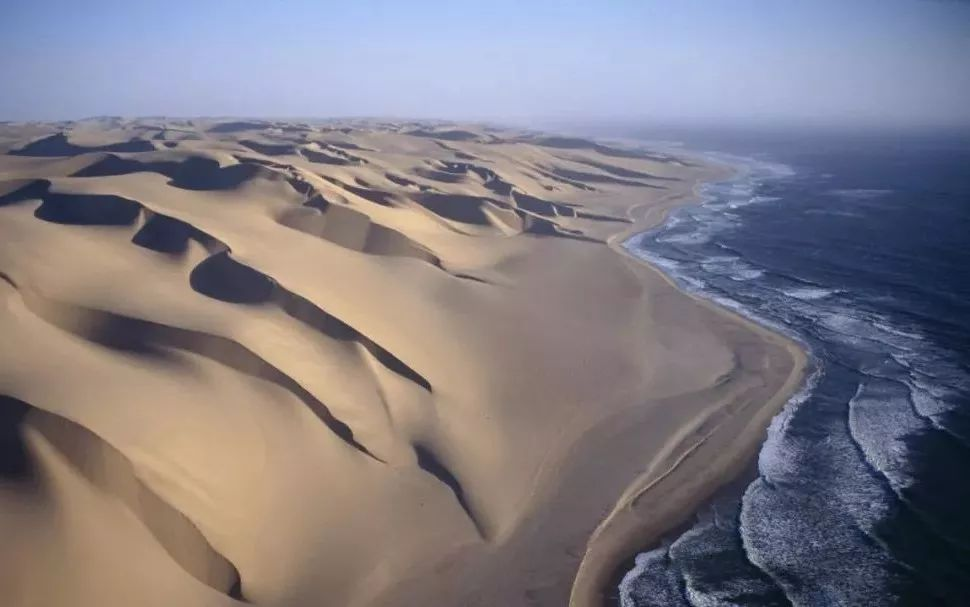
The Skeleton Coast is the northern part of the Atlantic coast of Namibia and south of Angola from the Kunene River south to the Swakop River, although the name is sometimes used to describe the entire Namib Desert coast. The Bushmen of the Namibian interior called the region "The Land God Made in Anger", while Portuguese sailors once referred to it as "The Gates of Hell."
From the air, the Skeleton Coast is a vast expanse of rippled, golden sand dunes, stretching from the Atlantic Ocean northeast to the inland gravel plains.
In 1933, a Swiss pilot named Carl Nauer crashed his plane near the coast while flying from Cape Town to London. Some said his remains would one day be found on the Skeleton Coast, giving the area its name. However, Nauer's remains were never found.
The Skeleton Coast is a treacherous area, with strong currents, fierce winds, dense fog, and dangerous reefs. Shipwrecks and the remains of sailors are scattered along the coast.
Despite its ominous name and history, the landscape where the desert meets the sea is a unique and unforgettable sight.
7. Darvaza Gas Crater, Turkmenistan
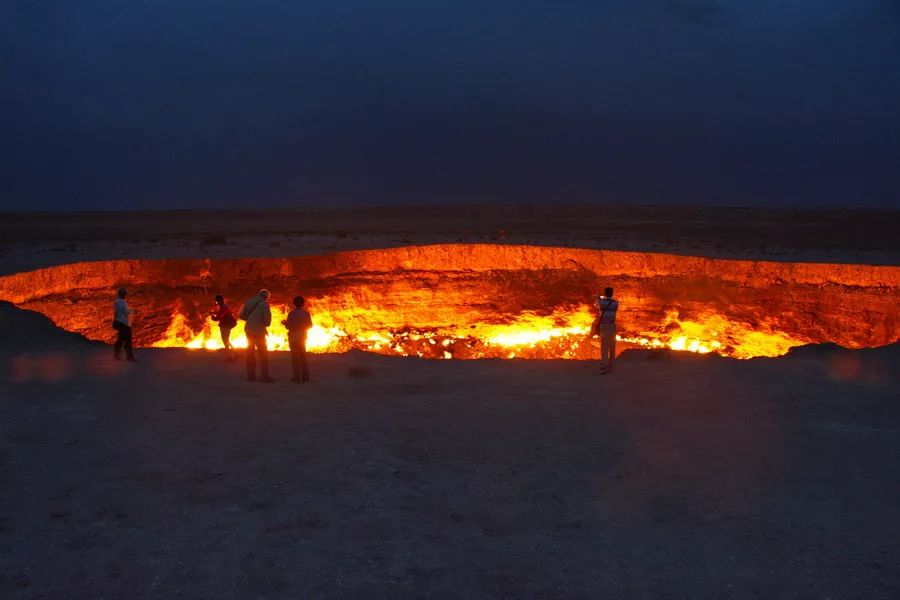
The Darvaza gas crater, also known as the "Door to Hell," is a natural gas field collapsed into a cavern located in Derweze, Turkmenistan. Geologists intentionally set it on fire to prevent the spread of methane gas in 1971, and it is thought to have been burning continuously since then. The crater has a diameter of 69 meters (226 feet) and a depth of 30 meters (98 feet).
The total area of the crater is comparable to the size of an American football field. From afar, it truly resembles a burning entrance, earning it the nickname "Door to Hell."
The crater has become a popular tourist attraction. In the past five years, 50,000 tourists have visited the site. The gas crater has a total area of 5,350 m2. The surrounding area is also popular for wild desert camping.
8. The Grand Prismatic Spring, USA
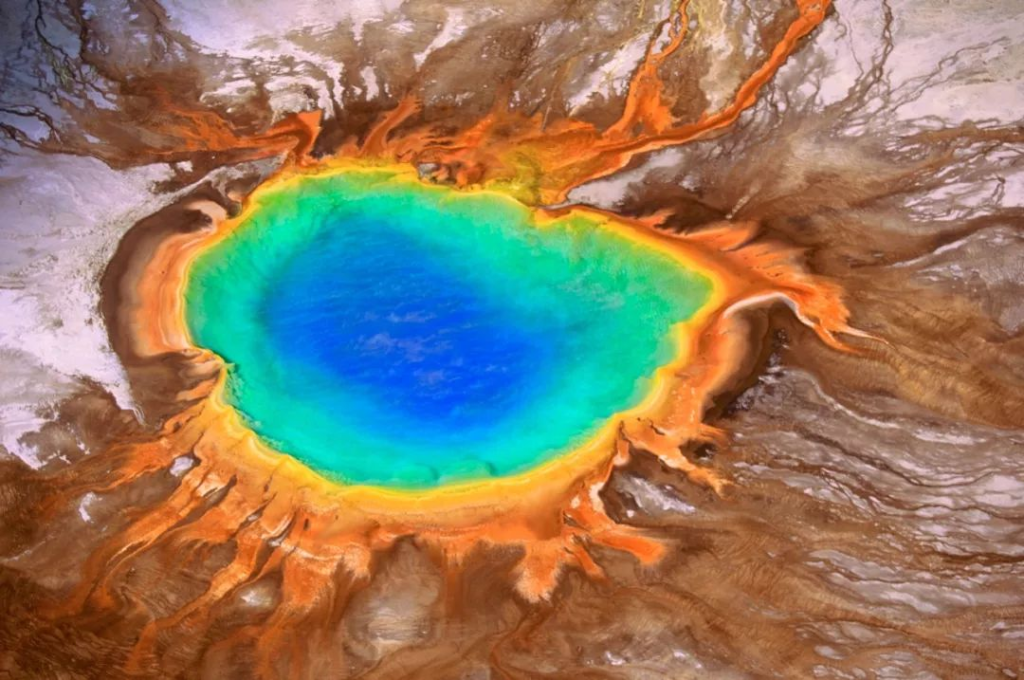
The Grand Prismatic Spring in Yellowstone National Park is the largest hot spring in the United States, and the third-largest in the world, after Frying Pan Lake in New Zealand and Boiling Lake in Dominica. It is located in the Midway Geyser Basin.
The vivid colors in the spring are the result of microbial mats around the edges of the mineral-rich water. The mats produce colors ranging from green to red; the amount of color in the microbial mats depends on the ratio of chlorophyll to carotenoids and on the temperature gradient in the runoff. In the summer, the mats tend to be orange and red, whereas in the winter the mats are usually dark green. The center of the pool is sterile due to extreme heat.
The deep blue color of the water in the center of the pool results from the intrinsic blue color of water.
9. The Danakil Desert, Eritrea
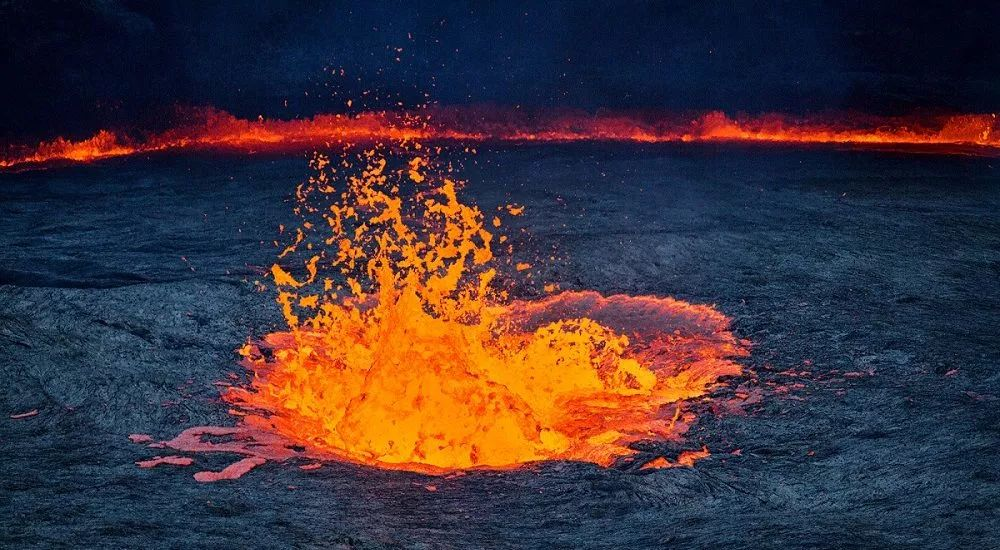
The Danakil Desert is a desert in northeast Ethiopia, southern Eritrea, and northwestern Djibouti. Situated in the Afar Triangle, it stretches across 136,956 square kilometers (52,879 sq mi) of arid terrain. It is inhabited by a few Afar, who engage in salt mining. The area is known for its volcanoes and extreme heat, with daytime temperatures surpassing 50 °C (122 °F). Less than one inch (25 mm) of rainfall occurs each year. The Danakil Desert is one of the lowest and hottest places on Earth.
If you're an adventurer rather than a typical tourist, and if you're drawn to remote, undeveloped places, then the Danakil Desert might be your dream destination.
It's an incredibly harsh and primal landscape with active volcanoes, scorching temperatures, noxious gases, and sulfurous lakes. While it might be unbearable for some, it offers an otherworldly experience, like walking on another planet.
10. Lake Hillier, Australia
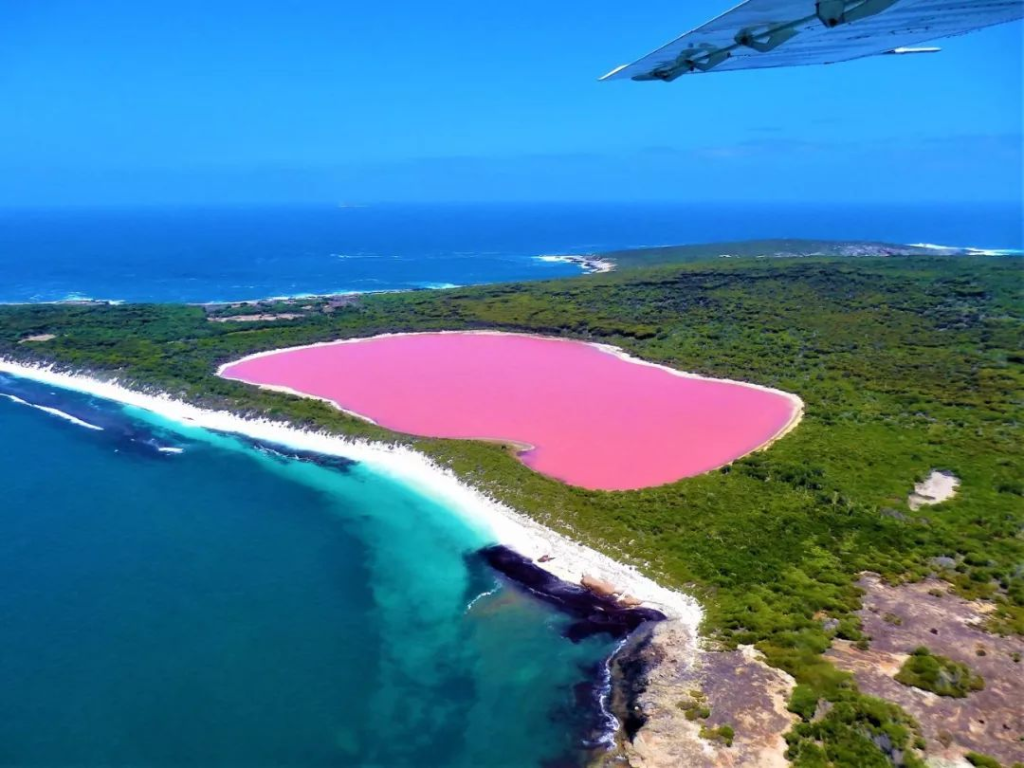
Lake Hillier is a saline lake on the edge of Middle Island, the largest of the islands and islets that make up the Recherche Archipelago in the Goldfields-Esperance region, off the south coast of Western Australia. It is particularly notable for its pink colour. A long and thin shore divides the Southern Ocean from the lake.
From above, the almost perfectly round, pink lake is a striking contrast to the surrounding greenery and blue ocean.
The pink colour is considered to be due to the presence of the organism Dunaliella salina. When the salt content of the lake is high, these algae produce carotenoid pigments, such as beta-carotene, giving the water its distinctive pink hue. The lake's color is not always pink and can vary depending on the salinity, ranging from pale green to deep red.